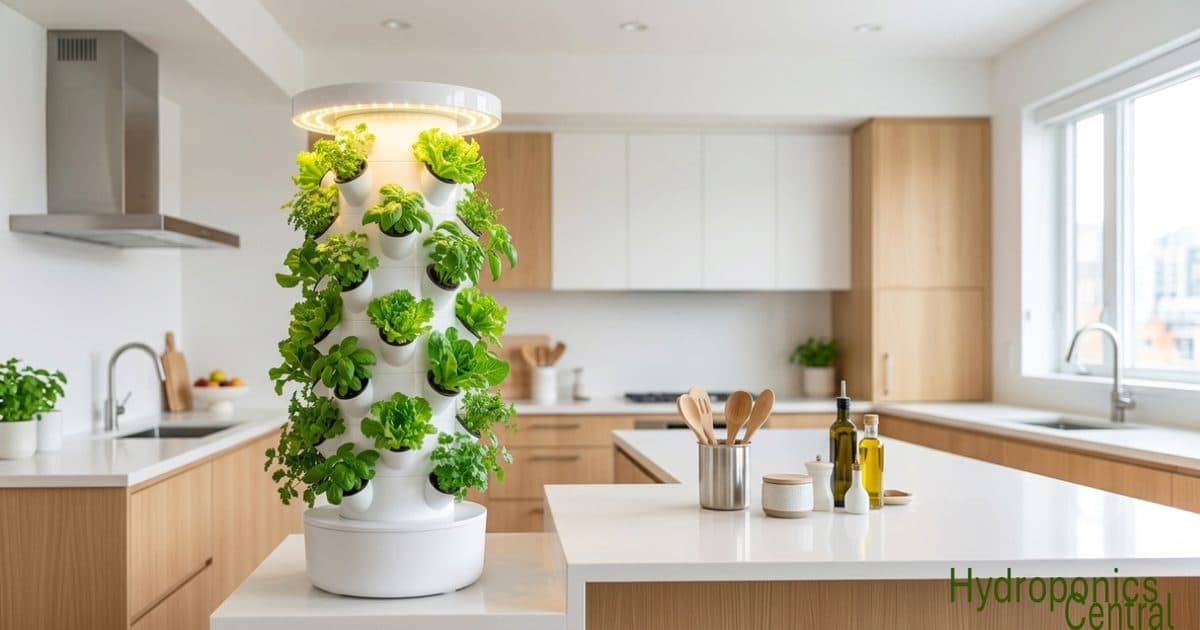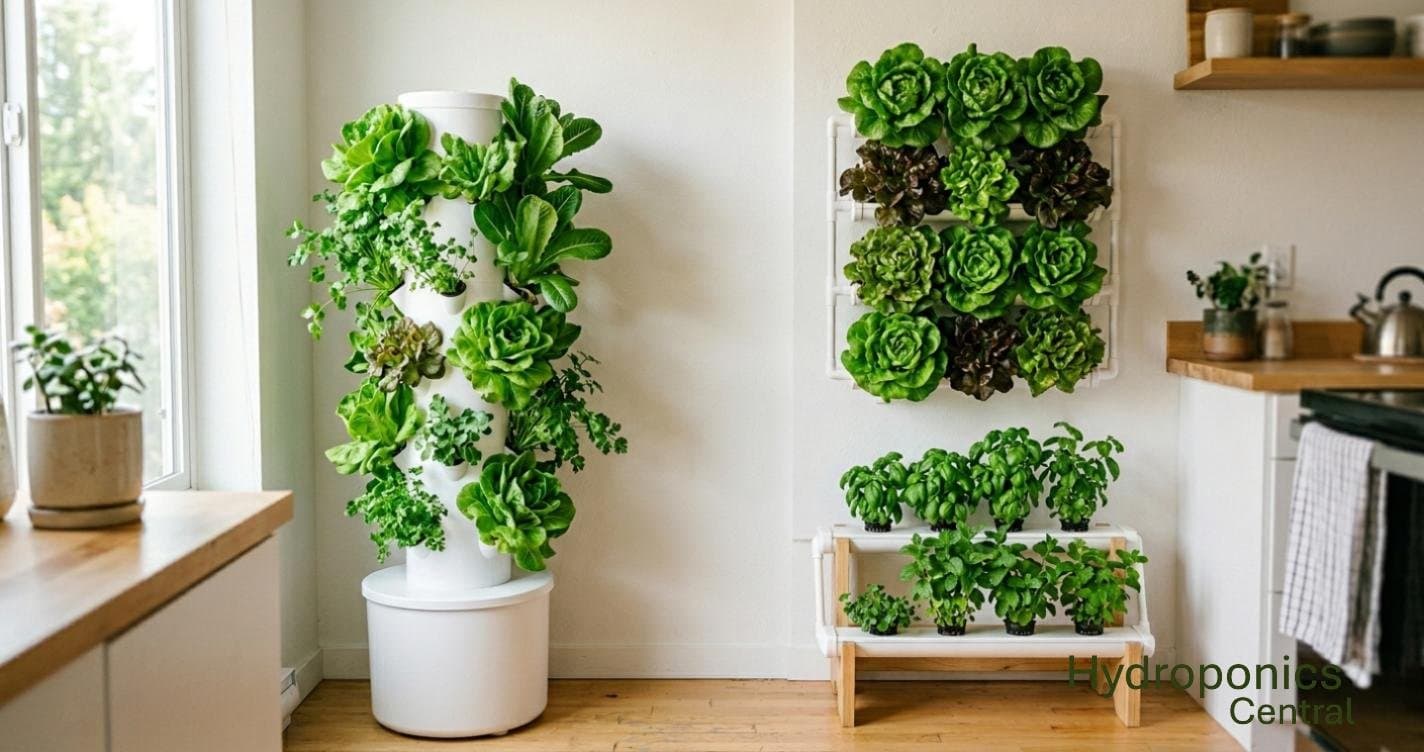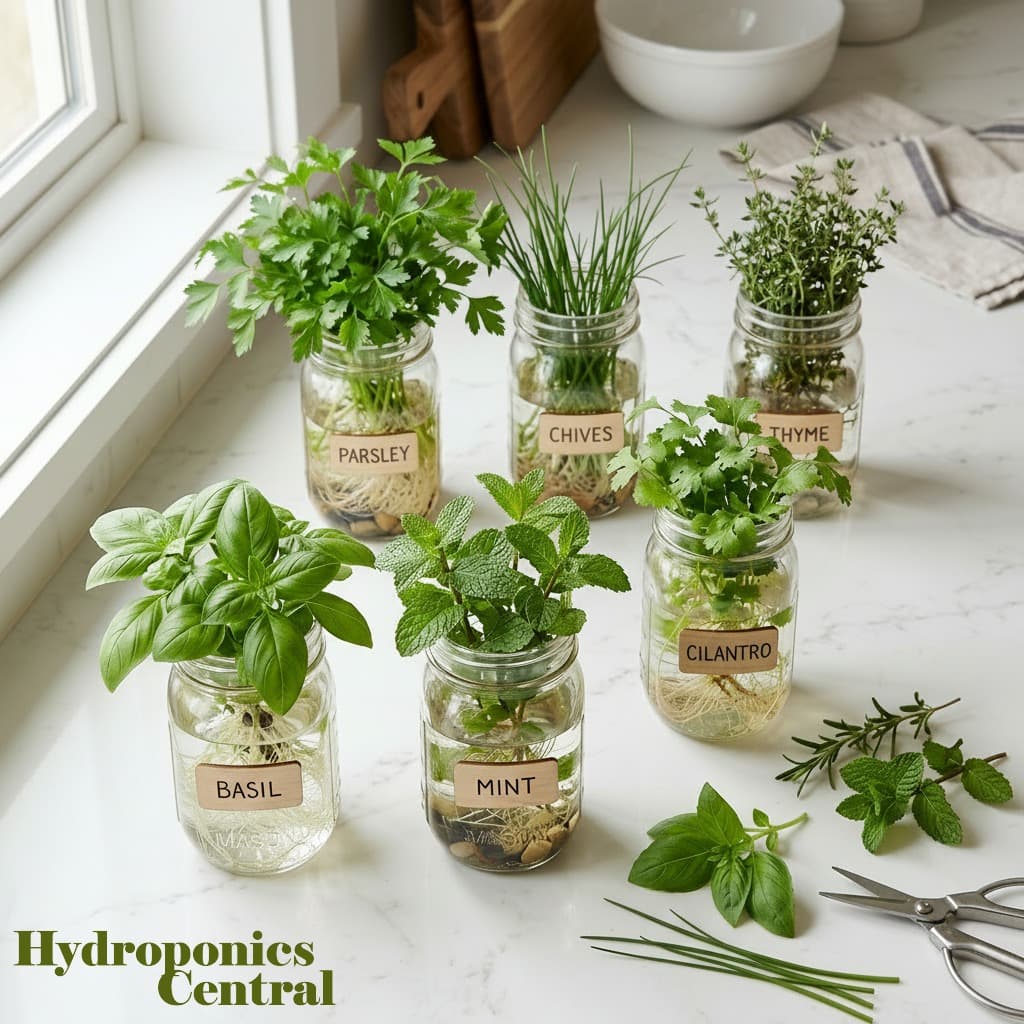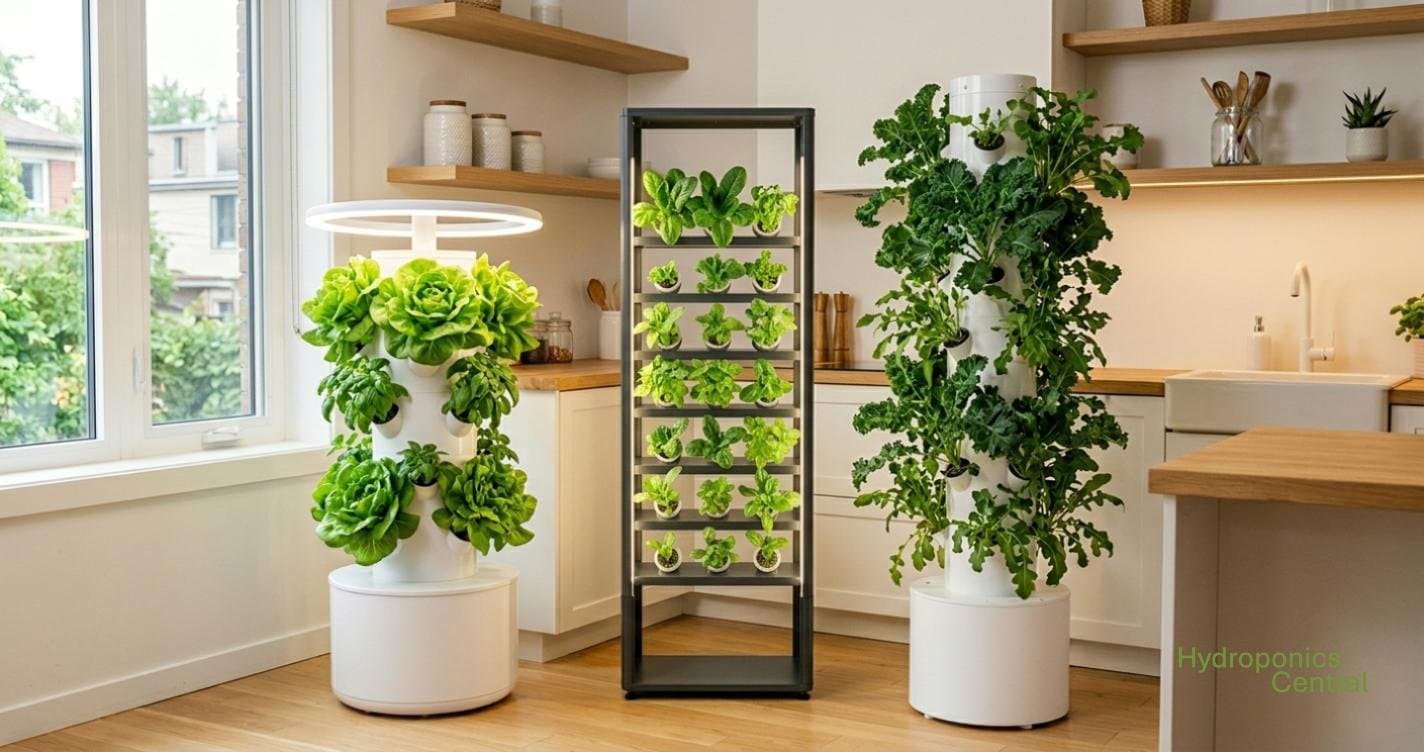
Hydroponic tower gardens range from $50 to $1,020 at purchase, but Year 1 ownership costs run from $230 to over $1,500, and that gap is almost entirely determined by the pod system, not tower quality. The best hydroponic tower garden for most apartment growers is the Lettuce Grow Nook ($499–$799, prices verified June 2026). Always confirm on brand sites before purchasing, since both Lettuce Grow and Costco have changed pricing twice in the last year. LEDs are built in, it holds 20 plants in 2 square feet, and it eliminates the $300–$600 separate lighting purchase that catches most tower buyers off guard after checkout.
I'm Carl, a content curator, not a licensed agronomist, and I don't own all of these. I read brand sites, BBB complaint records, Trustpilot, and owner forums so you don't have to. Most tower garden "best of" lists show you purchase prices and pod counts but skip the Year 1 ownership cost and the warranty fine print. Those are the numbers that actually determine whether a tower is affordable to run. For full specs and all seven systems side by side, the hydroponic garden tower guide has the detail. This post makes the call.
What actually makes the best hydroponic tower garden
The best tower garden isn't the one with the most pods or the slickest app. It's the one that costs least to own long-term and matches how much attention you want to give it. Four criteria do most of the work: ongoing cost, included LEDs, open vs. proprietary pods, and pump reliability.
Ongoing cost, not purchase price. Year 1 totals (pods, nutrients, electricity, lights) run from $230 (budget Amazon) to over $1,500 (Gardyn). Open-system towers cost 3–5× less to own over 2 years than proprietary pod systems. For any tower you'll keep past six months, Year 1 total cost is the number to compare.
Whether LEDs are included. Indoor towers need 12–16 hours of full-spectrum light daily. Several towers advertised at $350–$700 require a separate $300–$600 LED kit to function indoors, which is a surprise most buyers discover after checkout. The Nook, Gardyn, and Tower Garden HOME indoor bundle include LEDs. The ALTO GX and the large Lettuce Grow Farmstand do not.
Open vs. proprietary pods. Proprietary systems (Gardyn's yCubes, Tower Garden's pods) lock you into one supplier at $2–5 per pod, replaced every 2–3 months. Open systems (ALTO GX, budget Amazon) take any seed in standard net pots, which keeps growing medium under $20/year.
Pump reliability. Every tower runs on one submersible pump. Failures at 12–18 months appear across Gardyn and Lettuce Grow owner reports. A $15 spare pump is the best pre-emptive purchase you can make.
Best hydroponic tower garden by profile
For most home growers, the Lettuce Grow Nook is the best overall pick. If you want zero proprietary lock-in, look at the ALTO Garden GX. For large crops like squash and melons, Tower Garden HOME is the only home-market option that handles them. Profiles below.
Best overall: Lettuce Grow Nook ($499–$799)
The Nook fixes the two problems that undermine most tower purchases. LEDs are built in (no surprise $300–$600 lighting add-on), and you can use Lettuce Grow's $3 pre-sprouted seedlings or start your own in rockwool plugs with no forced subscription. 20 plants in 2 square feet covers herbs and greens for a household of 1–4. About 3 feet tall.
The price spread is real. $499 at Costco vs. $799 on the Lettuce Grow website. Check both. The 3-year warranty on all parts (including the pump) is the most consumer-friendly on this list, and it matters. Lettuce Grow has 8 BBB complaints in the last 3 years, several flagging defective pumps that killed plants and 2–3 business days per support reply. Document everything with photos from day one. The ~8-gallon reservoir tops up once or twice a week. Pump noise is minimal. Assembly took most owners about 2 hours. Budget the evening, not the half-hour the box promises.
For the complete Nook breakdown, including reservoir volume, pump specs, and crop compatibility, see the full tower garden comparison guide.
Best for zero lock-in: ALTO Garden GX ($200–$350 without lights)
The ALTO GX is for growers who want total seed freedom. No subscriptions, no proprietary orders, no reorder commitments. Standard net pots take any seed and any growing medium, and the tower holds 24 plants in a food-safe, BPA-free polypropylene body with 2mm walls, noticeably thicker than budget competitors. A lights bundle adds roughly $300. No app, no smart features. pH and nutrients are manual, which is the trade-off for full independence from any brand's supply chain. If you already own LED panels or plan an outdoor setup, it's the most cost-efficient premium tower available.
Best for hands-off automation: Gardyn Home 4 ($849)
Gardyn is the most automated tower available. Kelby, its AI assistant, monitors plants via camera, adjusts watering, and sends harvest reminders. For growers who don't want to manage pH or nutrient schedules manually, that automation is the actual product. Setup is under 15 minutes. 30 plants, LEDs included, about 5 feet tall.
Cost structure is where you read carefully. Without the Kelby membership ($34–$39/month), yCubes cost $4.99 each. With it, they drop to $1.99 plus 10 free credits monthly, which makes the membership effectively mandatory for pod economics. Realistic Year 1: $1,250–$1,500. Year 2 alone runs $400–$500, more than the Nook costs to buy outright.
Before you commit, know the risks. Trustpilot and PissedConsumer reports flag recurring pump failures (one owner cited three replacements in two years), thin OEM tubing that develops holes within months, and a support policy that has charged customers $190 plus shipping for a lid replacement after a pump-related issue. Customer service responds quickly but often sends the same low-quality tubing again. Budget $30 for upgraded silicone tubing on day one. The 6-gallon reservoir tops up twice a week. Some owners report a noticeable pump hum in quiet rooms.
Best first tower for beginners: Budget Amazon tower ($50–$150)
A budget tower (VEVOR, BAOSHISHAN, and similar) isn't the best tower. It's the best first tower. At $50–$150, it teaches you what the nutrient cycle actually feels like. You'll see how pH drifts, how much light your crops need, and what a clogged pump looks like before you spend $500+ on a premium system. If tower growing doesn't fit your routine, you've risked $100, not $900. Pair it with the hydroponic herb garden guide for crop-side fundamentals while you're learning.
The trade-offs are documented. Buyer reviews flag flimsy construction and poorly translated instructions, setup takes 1–2 hours, and warranty terms run 30–90 days with effectively no support after the box is opened. The most consistent failure mode is an undersized pump that can't push water to the top of the column, leaving upper plants dry. Check specific-model reviews for "top plants dying" before buying, and budget for a $15 replacement pump if it does.
Best for large crops: Tower Garden HOME ($1,020 indoor bundle)
Tower Garden HOME is the only home tower that reliably grows squash, cauliflower, cherry tomatoes, and melons. Its aeroponic design mists roots in open air rather than sitting them in growing medium. That approach produces 20–30% more plant biomass than hydroponic systems, and its structural capacity handles plants too heavy for any other tower on this list.
The indoor bundle (tower + cage + LED kit) runs $1,020 on the brand site, with a 12-month zero-interest plan around $80/month. The warranty is the strongest here: 5 years on structural parts (tower sections, pump, reservoir, timer), 1 year on LEDs. Honest caveats. Tower Garden is sold through Juice Plus consultants (an MLM), so pricing and aftercare vary by the consultant you're routed to. Returns carry a $50 fee within 90 days. Aeroponic is the least forgiving if the pump fails. Roots dry in hours. If herbs and greens are your only goal, this premium is hard to justify against the Nook. For large crops vertically, there's no comparable home alternative.
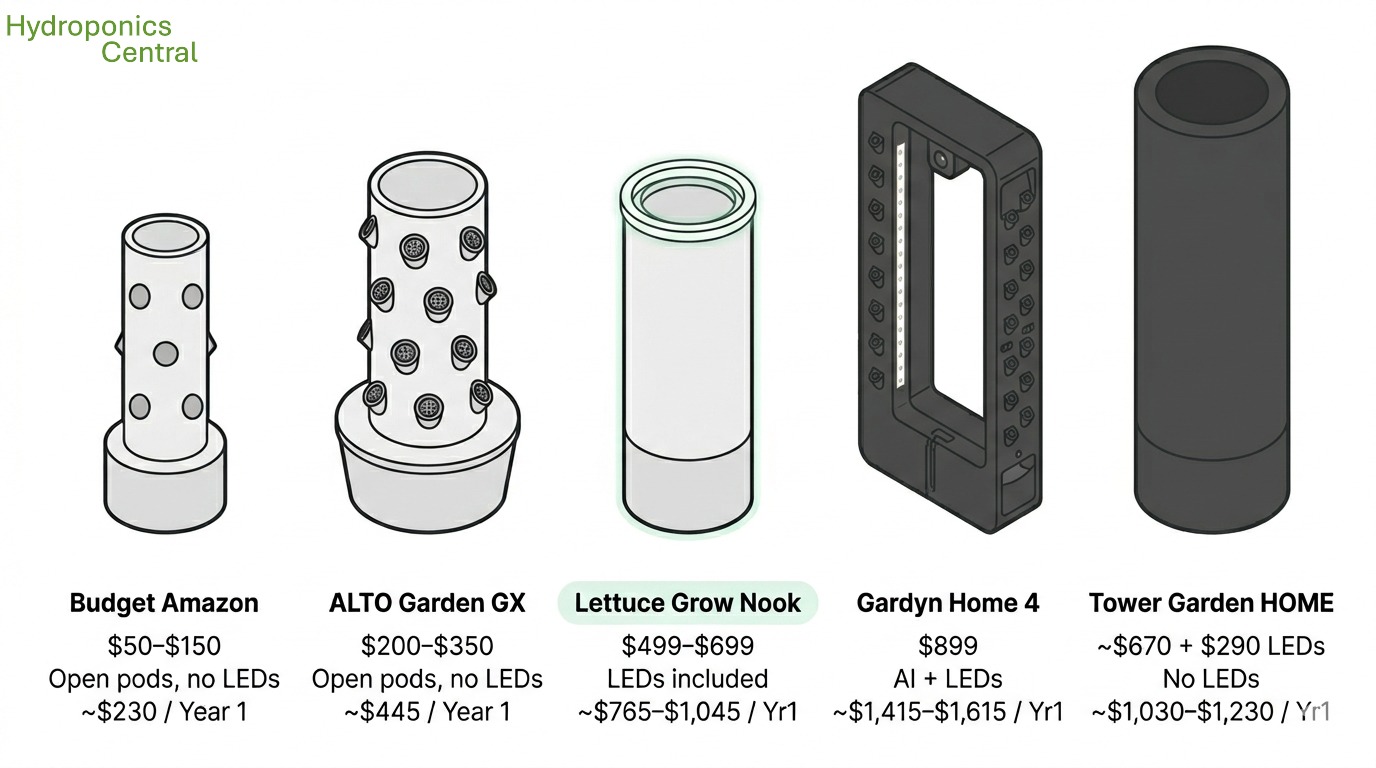
Quick comparison: all five picks
Prices verified June 2026. Confirm on brand websites before purchasing. Costs vary by retailer (Lettuce Grow at Costco often dips lowest), sale events, and configuration.
The pattern that matters most: the Year 1 gap between open and proprietary systems. Budget Amazon at $230 Year 1 vs. Gardyn at $1,250–$1,500, both growing the same lettuce and basil. The premium buys design and automation, not better crop output. The plants don't know the difference. The open systems pay you back fastest if you're willing to mix your own hydroponic nutrients. That's where the ongoing-cost gap actually comes from.
What to skip, and why
Towers are the wrong choice if tomatoes or peppers are your primary goal. Fruiting plants need root volumes that tower pod holes can't support at scale, and their canopy size makes tower spacing inefficient. A 5-gallon DWC bucket from the DIY hydroponic garden guide handles tomatoes better. Deeper root space, stronger aeration, and no top-heavy destabilization.
The Lettuce Grow Farmstand (large version) is not a good first tower. At $700–$950 plus a separate $600 LED kit, it's the most expensive setup on the market with no beginner advantage over the Nook.
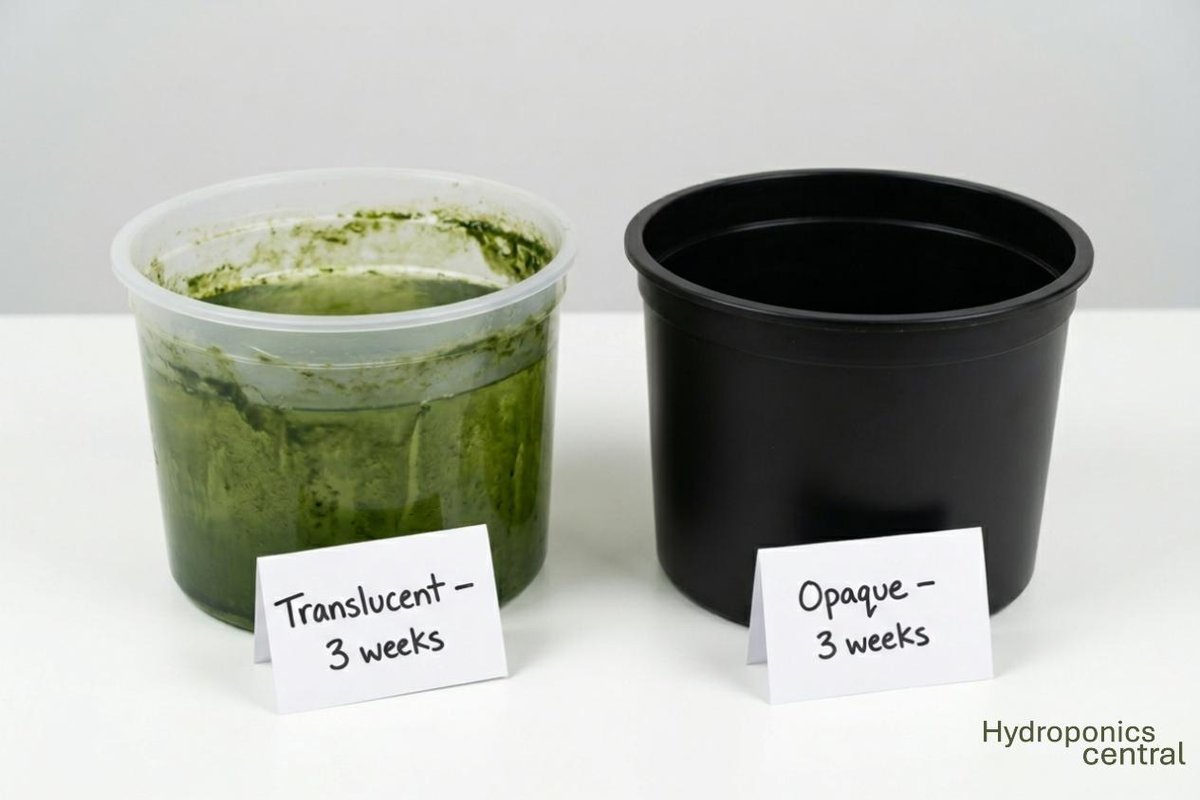
Any tower with a translucent reservoir will grow algae. Light hitting nutrient solution feeds green slime that clogs pump intakes. Several budget towers ship clear, so wrap in foil or opaque tape before first use.
For maximum plant density on a wall rather than a freestanding column, the hydroponic vertical garden guide covers five non-tower approaches that undercut even the cheapest tower on plant-per-dollar.
My take
If I were buying today, I'd go Lettuce Grow Nook, and the reason is visibility. Lettuce Grow community threads consistently show people still posting harvests 6–12 months in. Budget tower owners tend to disappear from their feeds after the first cycle. A 3-foot tower in a kitchen corner gets tended because it's in your eyeline every day. The DWC tote in the spare room does not.
If I were starting from zero, I'd buy a $50–$100 budget tower first. Three months of managing pH, watching a crop grow, and dealing with a clogged emitter will tell you more than any review about whether tower growing fits your routine, and which premium tower is worth spending on.
The honest thing worth saying. For herbs and leafy greens, the crops that thrive in every tower here, the $100 budget tower and the $849 Gardyn produce structurally identical results. The premium buys convenience and design, not better lettuce. For full cost tables and per-system crop compatibility, the hydroponic garden tower comparison has everything in one place.
Join 1,000+ growers getting one curated hydroponic tip every week. Subscribe to the Hydroponics Central newsletter. Free, no spam.
Key Takeaways
Quick reference summary
- 1The Lettuce Grow Nook ($499–$799, prices verified June 2026, confirm on brand sites) is the best overall pick for most apartment growers. LEDs are built in, 20 plants fit in 2 square feet, the reservoir holds about 8 gallons, and the semi-open pod system lets you use your own seedlings. It also carries the most consumer-friendly warranty on this list: 3 years on all parts including the pump.
- 2Open-system towers (ALTO Garden GX, budget Amazon) [cost 3–5× less to own over 2 years](https://mistculture.com/gardyn-vs-lettuce-grow-review/) than proprietary pod systems like Gardyn. Ongoing pod costs matter more than purchase price.
- 3Gardyn Home 4 ($849, verified June 2026) totals $1,250–$1,500 in Year 1 once you include the $34–$39/month Kelby membership that gates yCube pricing. It's the right call only if hands-off automation is worth that recurring cost.
- 4Budget Amazon towers ($50–$150) are the best first tower for beginners. Not because they're the best towers, but because they teach you the nutrient cycle and plant spacing before you spend $500+ on a premium system.
- 5Tower Garden HOME ($1,020 with LEDs included in the indoor bundle, verified June 2026) is the only home tower that reliably grows squash, cauliflower, cherry tomatoes, and melons. Its aeroponic design produces [20–30% more plant biomass](https://www.maxapress.com/article/doi/10.48130/tihort-0024-0002?viewType=HTML) than hydroponic systems, and it carries the longest warranty on this list (5 years on structural parts, 1 year on LEDs).
- 6Leafy greens and herbs like lettuce, basil, spinach, and mint thrive in every tower on this list. If those are your only crops, you're paying a premium for design and convenience, not crop performance.
Frequently Asked Questions
Common questions from our readers
Written by
Carl — Hydroponics CuratorI research hydroponics so you don't have to — going through university studies, extension programs, and grower communities to find what actually works for home growers.
I'm a content curator and researcher, not a licensed agronomist or commercial grower. Everything published here is sourced from credible third-party research, which is always linked inline. When in doubt, consult your local agricultural extension office. Learn more about how I research →
Found this helpful? Share it!